Richards
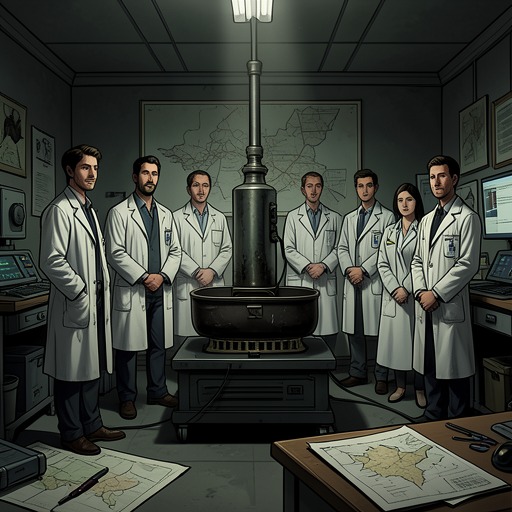
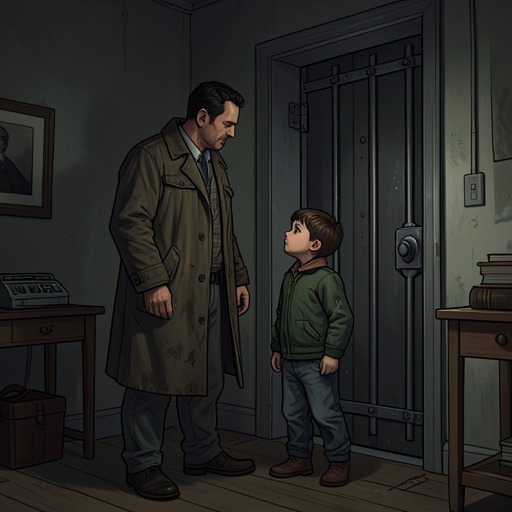
The Passage (Justin Cronin Edition)Richards is a civilian operative working for Project NOAH, where he helps recruit and transport subjects, escorts Bradford J. Wolgast through the facility, and monitors both the project’s personnel and its test subjects. He is a practical custodian of secrecy whose calm procedures coexist with a readiness to use lethal force; as Project NOAH progresses toward Operation Jumpstart, his increasingly bleak perspective exposes the distance between institutional control and the consequences of the work.
Identity and Introduction
Richards first appears as the civilian who meets Bradford J. Wolgast at the Project NOAH compound. Compact and dressed in jeans and a khaki shirt, with old-fashioned aviator glasses and pockmarked cheeks, he welcomes the agent and warns him that the compound’s altitude may take adjustment. He then escorts Wolgast to the Chalet, the compound’s prominent lodge-like building, which conceals a stripped-down modern interior. At its front desk, Richards has Wolgast surrender his handheld device and weapon to a guard before leading him through the building to Colonel Sykes’s office. The sequence establishes his role as guide and gatekeeper: he makes the facility legible to a newcomer while ensuring that the newcomer’s personal equipment remains under institutional control.
Richards also identifies Wolgast formally as an agent when leaving Sykes’s office. The brief courtesy of that introduction contrasts with the security routines surrounding their meeting. Wolgast has reached the remote compound in a blacked-out van, and his visit takes place within a chain of controlled access; Richards is one of the people who make that isolation function in practice.
Recruitment and Control
Richards’s work extends beyond escorting staff. When Lawrence Grey and two other men arrive at the airport in Cheyenne, Richards meets them and directs them to surrender wallets, phones, photographs, anything bearing writing, and even a bank pen. Their belongings go into a cloth bag before they enter a van whose blacked-out windows and sealed driver’s compartment make it effectively a metal transport box. Richards permits the men to exchange first names, but no more. The procedure strips away identifying objects and limits communication before the recruits are taken into the project’s custody.
His authority is direct and intimidating. During the drive, Grey steps away from the group; Richards orders him and the others back into the van and forbids further conversation. Grey notices that Richards had been holding something that is no longer visible and understands that another step could have brought a shot. Richards’s command restores control of the group, but the moment also shows how the system’s supposedly administrative transfer depends on the threat of force.
That same combination of logistics and concealment shapes Richards’s later role in locating Bradford J. Wolgast and Amy Harper Bellafonte. After the search for the two federal agents and the child becomes public, Richards uses a satellite feed to scan the states between Tennessee and Colorado. He counts eighteen possible signals, then identifies the one matching Wolgast’s tracking tag and reports its location as western Oklahoma. The precise technological task continues the earlier pattern: people are reduced to traceable signals, while Richards converts surveillance into actionable information for the project.
Methods and Perspective
Away from these operations, Richards spends time at a terminal playing FreeCell. He is working on game 36,592 and has already tried it repeatedly, while noting that he still has 91,048 games to go. He regards every hand as winnable if its cards are read correctly and the right moves are made in sequence. The game offers a revealing counterpoint to the project around him: both invite him to treat an arrangement of pieces as a solvable system, but the confidence that works at the card table cannot restore control over Project NOAH’s unfolding crisis.
His attention to the monitors carries the same habitual effort to make uncertain material readable. He listens to the sounds made by Giles Babcock, wondering whether the clicks and grunts contain words, but hears only noise. Richards speaks many languages and considers whether he could learn to recognize meaning in the sounds; nonetheless, his familiarity with language does not overcome the boundary between observation and comprehension. The scene places him in the role of watcher, able to examine the project’s subjects closely without necessarily understanding them.
Richards’s private judgments are notably blunt. He regards the project as adrift, and the inactivity imposed on its personnel as unsustainable: eighty men cannot be left on a mountainside indefinitely with little to do but count rabbit skins and keep silent. His assessment is practical rather than idealistic, but it registers a structural weakness in the system he serves. The facility demands secrecy and obedience while providing no convincing future for those expected to maintain them.
Project Breakdown and Final Stand
Richards’s detachment is clearest in his response to the Elizabeth Protocol, the contingency plan for killing a subject if necessary. He understands the name as a dark joke devised by Cole and regards the choice to name it after Cole’s dead wife as characteristic of Cole’s sardonic manner. Richards does not hesitate over the possibility of carrying out the order: if the moment comes, he will pull the plug. The decision is presented as procedure rather than moral crisis, underscoring how thoroughly the project has made lethal intervention part of ordinary operations.
At the same time, Richards recognizes that the institution is losing coherence. The project’s isolation and enforced idleness have left its personnel with no sustainable purpose, while the dreams associated with the work add another source of unease. Even the recruitment of a child, which Richards initially distinguishes from the use of homeless adults and death-row prisoners, is absorbed into the project’s utilitarian reasoning: Sykes explains that a younger thymus might better resist the virus and hold it in stasis. Richards treats the rationale with cynical humor, but the episode exposes the widening gulf between the project’s claims of controlled research and the human stakes of its methods.
When the containment situation worsens, Richards’s attention shifts from the child to the danger posed by the infected subjects. He believes the girl’s survival has become secondary to Special Weapons, while Bradford J. Wolgast remains with her and tries to revive her. After Anthony Lloyd Carter’s transformation, Richards watches the footage of Carter’s speed and violence and concludes that the threat is no longer theoretical. Project NOAH has secured the twelve subjects, thirteen counting Tim Fanning, and Richards’s assignment is nearly complete; the order to move them to White Sands marks the project’s transition to Operation Jumpstart and his apparent departure from direct responsibility.
That distance proves temporary. During the attack on the compound, Richards finds the Chalet entrance shattered and three soldiers dead. He recognizes that the rifles available there will not be enough and decides to run across the exposed grounds to the armory, behind the barracks, for heavier weapons. Around him, soldiers scatter, fire without coordination, and even shoot at one another. The man who once controlled transfers, monitored signals, and treated outcomes as manageable moves now has only a brief, practical choice: make a run for the armory while the compound’s defenses collapse.
Recruitment and Control
Richards’s work extends beyond guiding staff through the compound. When Lawrence Grey and two other men arrive at the airport in Cheyenne, Richards meets them and orders them to surrender wallets, phones, photographs, anything bearing writing, and even a pen from a bank. Their belongings go into a cloth bag before they enter a van with blacked-out windows and a sealed driver’s compartment. Richards allows the men to exchange first names, but nothing more. The procedure strips away identifying objects and limits communication before the recruits are taken into the project’s custody.
His authority is direct and intimidating. During the drive, Grey steps away from the group; Richards orders him and the others back into the van and forbids further conversation. Grey notices that Richards had been holding something that is no longer visible and understands that another step could have brought a shot. The command restores control, but the moment shows how this ostensibly administrative transfer depends on the threat of force.
The same combination of logistics and concealment shapes Richards’s later role in locating Bradford J. Wolgast and Amy Harper Bellafonte. After the search for the two federal agents and the child becomes public, Richards uses a satellite feed to scan the states between Tennessee and Colorado. He counts eighteen possible signals, identifies the one matching Wolgast’s tracking tag, and reports its location as western Oklahoma. The task continues the pattern: people become traceable signals, and Richards turns surveillance into actionable information for Project NOAH.
Methods and Perspective
Away from these operations, Richards spends time at a terminal playing FreeCell. He is working on game 36,592 and has already tried it repeatedly, while noting that he still has 91,048 games to go. He regards every hand as winnable if its cards are read correctly and the right moves are made in sequence. The game offers a counterpoint to the project around him: both invite him to treat an arrangement of pieces as a solvable system, but the confidence that works at the card table cannot restore control over Project NOAH’s unfolding crisis.
His attention to the monitors carries the same effort to make uncertain material readable. He listens to the sounds made by Giles Babcock, wondering whether the clicks and grunts contain words, but hears only noise. Richards speaks many languages and considers whether he could learn to recognize meaning in the sounds; nevertheless, his familiarity with language does not overcome the boundary between observation and comprehension. He is a watcher, able to examine the project’s subjects closely without necessarily understanding them.
Richards’s private judgments are blunt. He regards the project as adrift, and the inactivity imposed on its personnel as unsustainable: eighty men cannot be left on a mountainside indefinitely with little to do but count rabbit skins and keep silent. His assessment is practical rather than idealistic, but it registers a structural weakness in the system he serves. The facility demands secrecy and obedience while providing no convincing future for those expected to maintain them.
Project Breakdown and Final Stand
Richards’s detachment is clearest in his response to the Elizabeth Protocol, the contingency plan for killing a subject if necessary. He understands the name as a dark joke devised by Cole, named after Cole’s dead wife, and regards it as characteristic of Cole’s sardonic manner. Richards does not hesitate over the possibility of carrying out the order: if the moment comes, he will pull the plug. The decision is presented as procedure rather than moral crisis, showing how thoroughly the project has made lethal intervention part of ordinary operations.
At the same time, Richards recognizes that the institution is losing coherence. The isolation and enforced idleness have left its personnel with no sustainable purpose, while the dreams associated with the work add another source of unease. Even the recruitment of a child, which Richards initially distinguishes from the use of homeless adults and death-row prisoners, is absorbed into the project’s utilitarian reasoning: Sykes explains that a younger thymus might better resist the virus and hold it in stasis. Richards treats the rationale with cynical humor, but the episode exposes the gulf between the project’s claims of controlled research and the human stakes of its methods.
When the containment situation worsens, Richards’s attention shifts from the child to the danger posed by the infected subjects. He believes the girl’s survival has become secondary to Special Weapons, while Bradford J. Wolgast remains with her and tries to revive her. After Anthony Lloyd Carter transforms, Richards watches footage of Carter’s speed and violence and concludes that the threat is no longer theoretical. Project NOAH has secured the twelve subjects, thirteen counting Tim Fanning, and Richards’s assignment is nearly complete; the order to move them to White Sands marks the project’s transition to Operation Jumpstart and his apparent departure from direct responsibility.
That distance proves temporary. During the attack on the compound, Richards finds the Chalet entrance shattered and three soldiers dead. He recognizes that the rifles available there will not be enough and decides to run across the exposed grounds to the armory behind the barracks for heavier weapons. Soldiers scatter, fire without coordination, and even shoot at one another. The man who once controlled transfers, monitored signals, and treated outcomes as manageable moves now has only a brief practical choice: run for the armory as the compound’s defenses collapse.